Product Statement
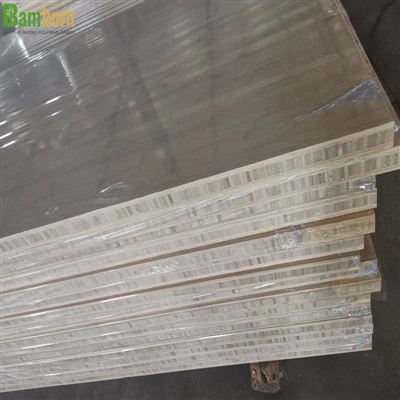
Amber bamboo plywood (also called caramel / carbonized bamboo plywood) delivers a warm, honey-brown color created by controlled heat & steam treatment of Moso bamboo before pressing. The tone runs through the lamellas, so cut edges show the same amber shade-perfect for exposed modern furniture, countertops, wall cladding and retail fixtures. Panels are factory-calibrated for tight thickness control and arrive smooth-sanded, ready for clear UV, primer-UV (paint-ready), or thin oil-wax finishes.
The amber tone is created by thermal–steam conditioning of the slats before pressing, not by staining. Heat drives natural sugars to darken, producing a through-body caramel color. When you cut or route a part, the hue is consistent from face to edge-perfect for designs that showcase the layered edge rather than hiding it.
Detailed Specs
| Item | Data |
|---|---|
| Sheet sizes | 1220×2440 mm (4×8 ft), 1250×2500 mm; long boards 3000 / 3100 / 4050 / 4100 mm |
| Thickness (calibrated) | 3 / 4 / 6 / 9 / 12 / 15 / 18 / 20 / 25 / 30 mm |
| Grain | Vertical • Horizontal • Cross-core (H/V/H or V/H/V) |
| Density | 650–760 kg/m³ |
| Moisture target | 8–10% |

Manufacturing & Material
Our amber panels start with 4–6-year Moso bamboo harvested from well-managed stands in Fujian. Moso's long fiber bundles deliver high screw pull-out and crisp machining; the plant regenerates from the root system, so supply is renewable without replanting. Compared with slow-growing hardwoods, Moso offers:
Fast yield + steady quality: uniform culm walls mean predictable lamella thickness and fewer rejects.
High specific strength: strong for its weight, ideal when you want rigid furniture parts without heavy carcasses.
Clean indoor profile: paired with E0/E1 adhesive systems, the material helps projects meet strict indoor air targets.

Panel Architectures You Can Order
Choose the build that matches your job:
Grain styles
Vertical: tight, linear lines; refined on doors and long wall runs.
Horizontal: wider stripes; a bolder furniture statement.
Stack-ups
1-ply skins (1.5–6 mm) for curved laminations or as a face over a stable core.
Balanced 3-ply (H/V/H or V/H/V) for flat, paint-friendly faces and hinge cups.
Thick multi-ply for benchtops and stair components.
Adhesives
E0/E1 low-emission for interior millwork.
WBP phenolic when parts face steam, spill, or frequent cleaning (cafés, vanities, worktops).


Finishing Recipes
CNC: use compression or up/down-cut tooling; hinge cups and dadoes rout sharply.
Sawing: ATB blades with a scorer keep faces clean.
Paint programs: specify primer-UV on both faces so coating stress stays balanced.
Clear looks: factory matte UV saves booth time and resists scuff.
Oil-wax: bamboo is dense-apply very thin coats and wipe back to avoid tack and gloss variation.
Wet areas: choose WBP, seal every edge and cut-out, and back-seal undersides of tops.

Applications & Scenarios
Drawer bottoms • Cabinet backs/liners • Interior wall & ceiling skins • Curved reception fronts • Acoustic slat faces • Signage & POS displays • Laser-cut organisers & crafts • Lamp bodies & shades • Decorative screens • Veneer-over-core skins.

Where Amber Bamboo Wins
Choose the build that matches your job:
Grain styles
Vertical: tight, linear lines; refined on doors and long wall runs.
Horizontal: wider stripes; a bolder furniture statement.
Stack-ups
1-ply skins (1.5–6 mm) for curved laminations or as a face over a stable core.
Balanced 3-ply (H/V/H or V/H/V) for flat, paint-friendly faces and hinge cups.
Thick multi-ply for benchtops and stair components.
Adhesives
E0/E1 low-emission for interior millwork.
WBP phenolic when parts face steam, spill, or frequent cleaning (cafés, vanities, worktops).
Packaging & Delivery
Panels are interleaved with kraft, PE-wrapped, edge-guarded and PET-strapped to ISPM-15 pallets. Desiccants/humidity cards available. MOQ 100 sheets/spec; typical build window 10–16 working days (add 3–5 days for UV). Mixed consolidation of thickness/grain/finish supported, with a pallet map for fast receiving.
FAQ – Amber Bamboo Plywood
1) Is "amber" the same as carbonized?
Yes. "Amber/caramel" describes the carbonized color created by heat & steam. It is a through-color, not a surface stain.
2) Will the color fade?
Like all natural materials, long UV exposure can lighten tone. Use UV-resistant clear coats and avoid prolonged direct sunlight for indoor installs.
3) Can I use amber bamboo for countertops?
Yes-specify WBP phenolic, seal all edges & cut-outs, and choose a durable finish (UV or hard-wax oil). For heavy spans, add a front stiffener or sub-top.
4) How consistent is the shade between pallets?
We batch sort by color and keep the job in one run where possible. For large projects, reserve material in a single lot to minimize variation.
5) What thickness is common for doors and shelves?
Doors: 15–18 mm; carcasses: 12–15 mm; shelves: 18–25 mm with a 36–40 mm thickened front edge for longer spans.
Hot Tags: amber bamboo plywood, China amber bamboo plywood manufacturers, carbonized bamboo plywood, Cross Laminated Bamboo Plywood, Bamboo Marine Plywood, 1 4 Inch Bamboo Plywood, Staining Bamboo Plywood, Chocolate Bamboo Plywood