


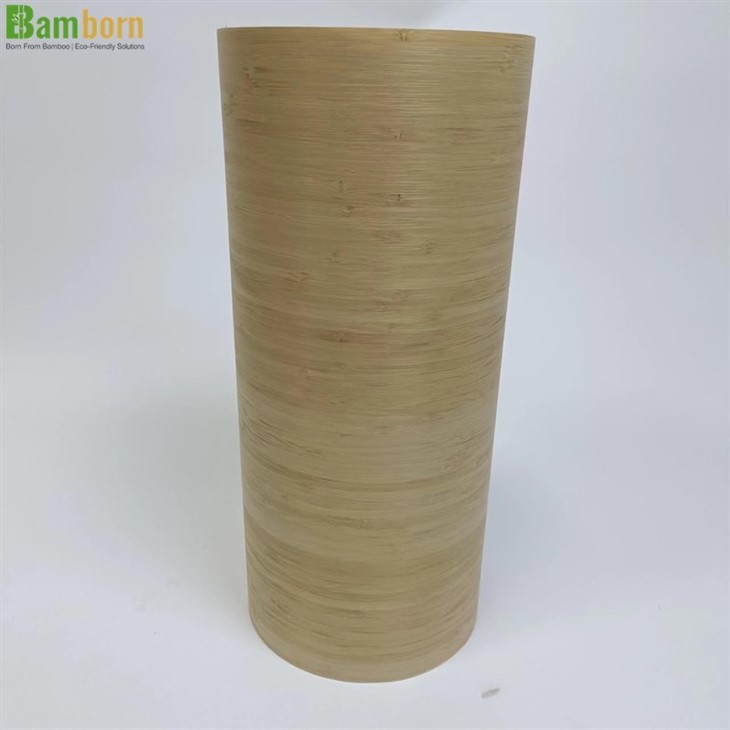
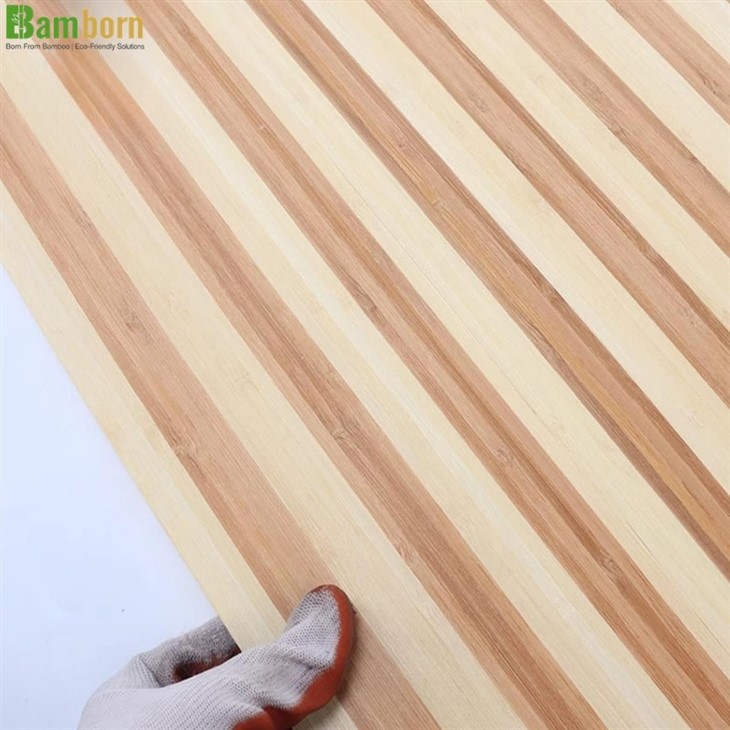
The Role of Veneer in Modern Design
For decades, veneer sheets have been a staple in furniture and interior design. Traditionally, these sheets were cut from hardwoods such as oak or maple, prized for their visual appeal but criticized for their environmental footprint. Today, there is a better way: bamboo veneer sheets.
Produced from one of the fastest-growing plants on earth, bamboo veneer combines sustainability with natural elegance. At Zhuyuan, we manufacture bamboo veneer sheets designed to meet the needs of modern architects, furniture makers, and eco-conscious brands.

Key Characteristics (Explained as Buyer Questions)
Q: What thickness do bamboo veneer sheets usually have?
A: Most veneers are between 0.3mm and 0.6mm, thin enough for flexibility yet strong enough to last.
Q: Are the sheets backed for stability?
A: Yes, each veneer sheet is reinforced with paper or fleece backing, which helps prevent cracking during handling.
Q: Can I order different sizes?
A: Absolutely. Standard widths range from 430mm to 1250mm, with lengths up to 2500mm, but custom sizes can be produced.


Compared with Other Materials
| Material | Bamboo Veneer Sheets | Hardwood Veneer | Plastic Laminate |
|---|---|---|---|
| Growth Cycle | 4–6 years | 30–60 years | Synthetic |
| Aesthetics | Natural & modern | Classic luxury | Artificial look |
| Flexibility | High | Moderate | High |
| Sustainability | Excellent | Poor | Low |
| Indoor Health Safety | E0/E1 adhesives | Varies | Often chemical-based |
Applications in the Real World
Walk into any modern home or office, and chances are you'll see natural surfaces everywhere-wood accents, stone countertops, or textured panels. But there's another material quietly reshaping the world of interiors: bamboo veneer sheets. They look elegant, perform reliably, and, most importantly, help reduce our impact on the planet.


Why Builders and Designers Are Switching
In conversations with architects and manufacturers, three reasons keep coming up:
Eco Credentials – Clients increasingly request materials that support green building certification.
Cost Efficiency – Veneer uses fewer raw materials than solid wood, keeping costs competitive.
Aesthetic Range – Bamboo veneer provides both subtle and dramatic looks, depending on the treatment.
How Bamboo Veneer Supports Sustainability
Let's face it: the building and furniture industries consume enormous amounts of timber every year. Hardwood veneers, though efficient compared to solid lumber, still depend on forests that take decades-or even centuries-to regenerate.
Bamboo changes that equation:
🌱 Fast growth – Harvest-ready in 4–6 years.
🔁 Self-regenerating – No replanting needed after cutting.
💧 Low input – Minimal need for water, pesticides, or fertilizers.
When paired with low-emission adhesives (E0/E1) and FSC certification, bamboo veneer sheets become a top choice for projects aiming to meet sustainability standards like LEED or BREEAM.
Hot Tags: bamboo veneer sheets, China bamboo veneer sheets manufacturers, Bamboo Veneer Plywood, 0 25 mm Striped Bamboo Veneer, Moso Bamboo Veneer, Bamboo Wood Veneer, Bamboo Veneer For Skateboards, Bamboo Veneer For Longboards


