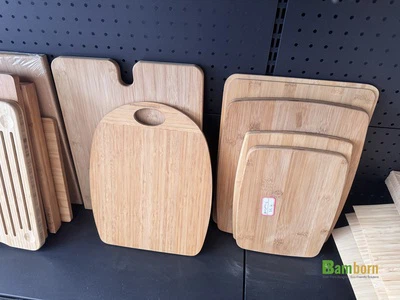
Bamboo cutting boards are valued for their eco-friendliness, durability, and natural antibacterial qualities. However, a common question from buyers is: are bamboo cutting boards prone to mold?
1. Why Bamboo Can Develop Mold
Bamboo is a natural, plant-based material, and like all organic fibers, it can absorb moisture if not properly cared for. When cutting boards are left damp, stacked without airflow, or stored in humid environments, mold may develop over time.
At BAMBORN, we process bamboo with high-temperature sterilization, polishing, and drying treatments to reduce moisture retention and improve resistance against mold.
2. How to Prevent Mold on Bamboo Cutting Boards
Bamboo cutting boards are not inherently moldy - mold only appears with poor maintenance. To prevent it:
Handwash only with warm water and mild soap.
Dry completely before storing. Always air-dry upright.
Avoid soaking boards in water for long periods.
Condition regularly with food-grade mineral oil to seal bamboo fibers.
Store in a ventilated area, not in closed cabinets with high humidity.
With these practices, bamboo cutting boards stay safe and mold-free.
3. Comparing Bamboo to Other Materials
Plastic boards → Do not mold but can harbor bacteria in deep grooves.
Wooden boards → Absorb moisture more easily than bamboo and are more prone to mold if neglected.
Bamboo boards → Less absorbent than hardwood, making them more resistant to mold when properly maintained.
This makes bamboo one of the most balanced options for hygienic food preparation.

4. Business Value for Buyers
Educating customers on care instructions reduces product returns and builds trust. BAMBORN supports global buyers by providing:
Bamboo cutting boards with care labels and packaging that highlight mold prevention.
OEM & ODM customization for retail and promotional markets.
Polished, food-safe finishes for better durability and hygiene.
Conclusion
Bamboo cutting boards are not inherently prone to mold, but like all natural products, they can develop mold if left damp or stored incorrectly. With proper washing, drying, and oiling, they remain clean, safe, and long-lasting.
As a specialized bamboo products manufacturer and global supplier, BAMBORN provides:
Premium bamboo cutting boards designed for hygiene and durability
FDA, LFGB, and SGS certified food-safety production
Bulk OEM & ODM services with private labeling and custom packaging
Competitive factory pricing and reliable worldwide delivery
📩 Contact BAMBORN today to place bulk orders and supply your customers with bamboo cutting boards that are eco-friendly, durable, and resistant to mold.
FAQs About Bamboo Cutting Boards and Mold
Q1: Can bamboo cutting boards get moldy?
Yes, if left damp or stored in humid places, but this is preventable.
Q2: How do I prevent mold on bamboo boards?
Handwash, air-dry upright, avoid soaking, and oil regularly.
Q3: Are bamboo cutting boards more mold-resistant than wood?
Yes, bamboo absorbs less water than hardwood and resists mold better.
Q4: Can moldy bamboo boards be cleaned and reused?
Light mold may be removed with vinegar and baking soda, but heavily affected boards should be replaced.
Q5: Do BAMBORN boards come mold-resistant?
Yes, all boards are heat-treated, polished, and dried during production for improved resistance.
How to Order from BAMBORN
When sending your inquiry, please include:
Board size and thickness
Design style (plain, grooved, handle, juice groove, set)
Packaging requirements (bulk cartons, eco-friendly packs, branded boxes)
Application (household, restaurant supply, retail, promotional)
Order quantity and destination country
Our sales team will reply with a quotation within 12 hours and assist with shipping solutions.
📩 Reach out to BAMBORN now and let us supply your business with bamboo cutting boards that are durable, hygienic, and resistant to mold.