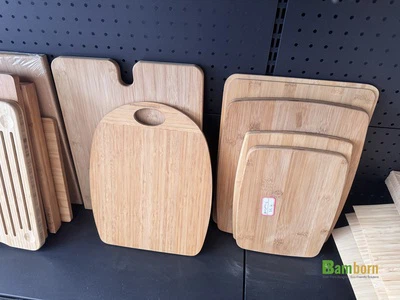
As the name suggests, a bamboo cutting board is also called a bamboo chopping board. It's placed on the stovetop to prevent damage while cutting vegetables. In the past, cutting boards were primarily made of wood or plastic. However, due to the wear and tear and the harmful effects of plastic, bamboo is now the predominant material on the market.
Many families use traditional wooden cutting boards for cutting cooked food, while many young people prefer plastic ones. However, cooked food is a gateway for illness. Wooden cutting boards are prone to chipping, while plastic boards are prone to breeding bacteria. Recently, bamboo cutting boards have become available on the market. They are not only lightweight and smooth, but also have antibacterial properties.
"Compared to wooden and plastic cutting boards, bamboo cutting boards are safer." Experts explain that traditional wooden cutting boards are not safe. For example, cutting boards made of ebony wood contain toxic substances. Using them to cut cooked food can contaminate the food and cause symptoms such as vomiting, abdominal pain, and dizziness. Some cutting boards made of looser wood are prone to knife marks. If not cleaned thoroughly, they can easily harbor dirt and bacteria, potentially contaminating food. While plastic cutting boards are attractive and lightweight, they can easily harbor bacteria if not dried, making them unsuitable for cutting cooked food.
Bamboo cutting boards, treated with high temperatures and high pressures, are non-cracking and non-deformable, wear-resistant, hard, and resilient. They are lightweight, hygienic, and have a pleasant aroma. From a Traditional Chinese Medicine perspective, bamboo has a sweet, mild, and cooling nature, which may inhibit bacterial growth. Therefore, bamboo cutting boards are an ideal choice for cutting cooked food.