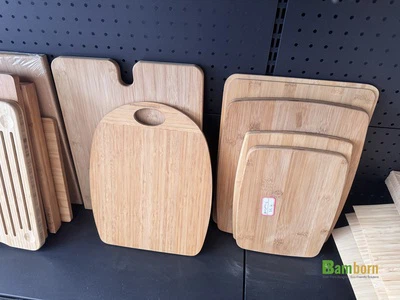
How to Cut Bamboo Panels
Tools Needed
Measuring tape and pencil
Straight edge or carpenter's square
Fine-toothed circular saw blade or table saw blade (carbide-tipped recommended)
Jigsaw with fine-toothed blade (for curves or detailed cuts)
Clamps
Safety goggles, dust mask, ear protection
Sandpaper or sanding block
Vacuum or dust collection system
Step-by-Step Guide
1. Measure and Mark
Accurately measure the panel and mark the cut line using a pencil and straight edge or square.
Double-check measurements before cutting, as bamboo panels can be expensive and difficult to replace.
2. Secure the Panel
Clamp the bamboo panel securely to a stable work surface.
Make sure the panel is flat with no movement to avoid uneven cuts or kickback.
3. Choose the Right Saw Blade
Use a fine-toothed, carbide-tipped blade designed for hardwoods or bamboo. This reduces splintering.
For straight cuts, a circular saw or table saw works best.
For curves or intricate shapes, use a jigsaw with a fine-toothed blade suitable for wood and bamboo.
4. Make the Cut
Cut slowly and steadily, allowing the blade to do the work without forcing it.
For long cuts, consider a guide to keep the blade straight and accurate.
For thick bamboo panels, multiple passes may be necessary.
5. Finish Edges
Sand edges smooth with medium to fine grit sandpaper or a sanding block to remove splinters and roughness.
Vacuum dust to keep the work area clean and reduce airborne particles.
Safety Tips
Wear eye protection and a dust mask to guard against fine bamboo dust.
Use ear protection when working with power tools.
Work in a well-ventilated area or use dust extraction equipment.
Additional Considerations
Bamboo panels are dense and hard; routine blade sharpening or replacement ensures clean cuts.
Practice on scrap pieces if unfamiliar with tools or bamboo properties.
Use a wet saw or dampen bamboo if excessive splintering occurs (optional).