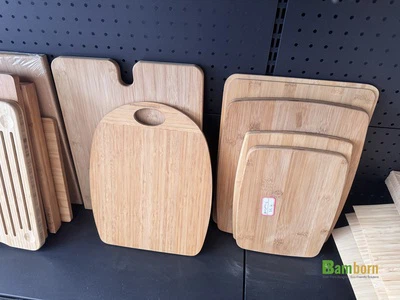
Bamboo cutting boards have become popular worldwide for their eco-friendly appeal, durability, and affordability. However, like all kitchen tools, they also have limitations buyers should consider. Many distributors, retailers, and restaurants ask: what are the disadvantages of bamboo cutting boards compared to other materials like wood or plastic?

1. Harder Surface Than Some Woods
Bamboo cutting boards are denser and harder than many traditional hardwoods such as maple. While this makes them durable, it can be tough on knives. Frequent use may dull blades faster compared to softer wood boards.
At BAMBORN, we balance hardness and smoothness through precision polishing and finishing, reducing wear on knives while maintaining durability.
2. Prone to Cracking if Not Maintained
Bamboo is naturally porous, and without proper care, boards may warp or crack over time. Exposure to excess water, dishwashers, or extreme dryness can shorten their lifespan.
Not dishwasher safe – High heat and steam can cause damage.
Require oiling – To prevent drying and splitting, boards need periodic conditioning.
3. More Glue in Manufacturing
Unlike solid wood boards, bamboo cutting boards are often made by bonding strips of bamboo together with food-safe adhesives. While safe, this construction method means there are more seams that may weaken if exposed to excessive moisture.
BAMBORN uses eco-friendly, food-grade adhesives and strict quality control to ensure boards remain durable and safe for food contact.
4. Limited Resistance to Heavy Chopping
Bamboo boards work well for everyday slicing, fruits, vegetables, and boneless meats. However, they are less ideal for heavy-duty chopping (e.g., cleavers or bones), where hardwood or end-grain cutting boards perform better.
Conclusion
The main disadvantages of bamboo cutting boards include their hard surface that can dull knives, susceptibility to cracking if not cared for, glue seams in construction, and limited suitability for heavy chopping. However, with proper care, they remain an affordable, stylish, and eco-friendly choice for most kitchens.
As a specialized bamboo products manufacturer and global supplier, BAMBORN offers:
Premium bamboo cutting boards in multiple sizes and styles
FDA, LFGB, and SGS food-safety certifications
Heat-treated, polished finishes for durability and hygiene
Bulk OEM & ODM customization with private labeling
Competitive factory pricing and reliable worldwide shipping
📩 Contact BAMBORN today to place bulk orders and supply your customers with high-quality bamboo cutting boards that balance eco-friendliness with functionality.
FAQs About Bamboo Cutting Board Disadvantages
Q1: Do bamboo cutting boards dull knives quickly?
Yes, bamboo is harder than many woods, but proper finishing (like BAMBORN's) reduces this effect.
Q2: Can bamboo cutting boards crack?
Yes, if exposed to excess water or not conditioned with oil, they may warp or crack.
Q3: Why are bamboo cutting boards made with glue?
Because bamboo grows in stalks, strips are bonded together. BAMBORN only uses food-grade adhesives.
Q4: Are bamboo cutting boards dishwasher safe?
No, handwashing is recommended to preserve strength and longevity.
Q5: Are bamboo cutting boards good for all foods?
Yes, they are excellent for fruits, vegetables, bread, and boneless meats, but not ideal for heavy cleaver use.
How to Order from BAMBORN
When placing your inquiry, please include:
Board size and thickness
Design style (plain, grooved, handle cut, juice groove)
Packaging requirements (bulk cartons, branded boxes, eco-friendly packs)
Application (retail, restaurant supply, promotional)
Order quantity and destination country
Our sales team will provide a detailed quotation within 12 hours and support you with logistics solutions.
📩 Reach out to BAMBORN now and let us supply your business with durable, eco-friendly bamboo cutting boards that meet international standards.