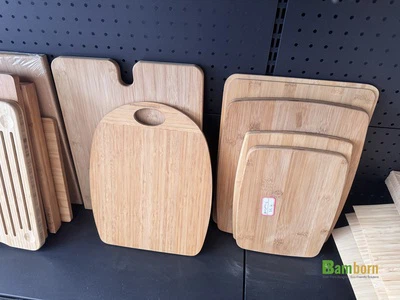
Commercial Grade Bamboo Cutting Boards for Restaurants
Restaurants operate in high-pressure kitchen environments where cutting boards must withstand heavy daily use, strict hygiene standards, and constant cleaning. For food service buyers, choosing commercial-grade bamboo cutting boards requires more than selecting an attractive product - it requires durability, compliance, and long-term supply stability.
This guide explains what restaurants and food service distributors should consider when sourcing bamboo cutting boards for commercial kitchens.
What Makes a Cutting Board "Commercial Grade"
Commercial-grade cutting boards differ from household models in several ways:
• Thicker construction
• Higher density material
• Stronger bonding strength
• Enhanced moisture resistance
• Strict food safety compliance
They are designed for repetitive chopping, slicing, and washing in busy kitchen operations.
1. Thickness and Structural Strength
Restaurants typically require thicker boards than retail home users.
Recommended specifications:
• 20–25 mm thickness for medium-duty use
• 30 mm or thicker for heavy-duty use
• Reinforced laminated construction
Strand-woven bamboo boards offer higher hardness and better resistance to knife impact.
2. Food Safety Compliance
Commercial kitchens must comply with local health regulations.
Importers and restaurant suppliers should verify:
• FDA compliance for US markets
• LFGB compliance for EU markets
• Low formaldehyde adhesives
• Safe mineral oil finishing
Failure to meet standards can result in health inspection penalties.
3. Moisture and Mold Resistance
Restaurant environments involve frequent washing and exposure to moisture.
Important features:
• Controlled moisture content (8–12%)
• Proper sealing with food-grade oil
• Smooth surface to prevent bacterial buildup
While bamboo is naturally resistant, proper processing is essential for commercial durability.
4. Easy Cleaning and Maintenance
Commercial kitchens require cutting boards that:
• Can be sanitized easily
• Have smooth surfaces
• Resist deep knife grooves
• Maintain shape after repeated washing
Deep cuts can harbor bacteria, so surface hardness matters.
5. Anti-Warping Stability
Frequent washing and temperature variation can cause warping if moisture control is inadequate.
Professional manufacturers:
• Use kiln-dried bamboo
• Balance grain orientation
• Conduct stress-release processing
This improves long-term dimensional stability.
6. Custom Sizing for Restaurant Needs
Restaurants often require specific dimensions:
• Large prep boards
• Countertop-fitting sizes
• Boards with juice grooves
• Non-slip options
OEM support allows suppliers to meet operational needs precisely.
7. Branding and Private Label for Food Service Suppliers
Food service distributors may require:
• Laser engraved logos
• Batch identification marks
• Custom packaging for wholesale
Branding enhances professional presentation in restaurant supply channels.
8. Bulk Order Planning for Restaurant Chains
Chain restaurants require:
• Consistent quality across locations
• Predictable reorder cycles
• Stable pricing agreements
• Large-volume production capacity
Working with experienced manufacturers ensures long-term reliability.
9. Cost vs Durability Consideration
Commercial buyers should not focus solely on lowest price.
Higher-density bamboo boards may cost slightly more but:
• Last longer
• Reduce replacement frequency
• Lower total operational cost
Durability often provides better long-term value.
10. Why Restaurants Are Choosing Bamboo
Compared to traditional wood:
• Faster renewable resource
• Stable supply
• Competitive pricing
• Modern sustainable image
Many restaurants integrate bamboo products into their eco-friendly branding strategy.
Commercial-grade bamboo cutting boards must meet higher durability, hygiene, and structural standards than residential models. Restaurants and food service suppliers should evaluate thickness, bonding quality, moisture control, compliance, and long-term supply stability before placing bulk orders.
Choosing the right manufacturer ensures performance under daily commercial kitchen demands while maintaining regulatory compliance and brand reputation.