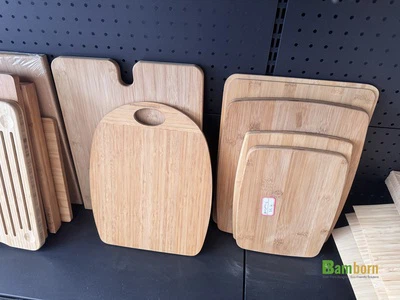
Bamboo plywood has become one of the most popular eco-friendly alternatives to traditional hardwood plywood. Strong, lightweight, and sustainable, it is widely used in furniture, construction, flooring, and interior design. But how exactly is bamboo plywood made? Understanding the manufacturing process not only helps you appreciate the durability of the material but also allows you to make informed choices when purchasing.
In this article, Fujian Zhuyuan Materials Co., Ltd., a trusted manufacturer of bamboo products, walks you through the step-by-step process of bamboo plywood production.

Step 1: Harvesting Bamboo
The journey begins with the harvesting of mature bamboo. Unlike hardwood trees, which can take decades to mature, bamboo grows rapidly and can be harvested every 3–5 years. This makes bamboo one of the most sustainable raw materials on Earth.
At Fujian Zhuyuan Materials Co., Ltd., we carefully select mature bamboo stalks from managed bamboo forests in Fujian, ensuring that our supply is both sustainable and environmentally friendly.
Step 2: Splitting and Slicing Bamboo
After harvesting, the bamboo culms (the hollow stems) are split into smaller strips. These strips are then sliced into thin, uniform pieces. At this stage, the outer green skin is removed, leaving only the strong inner fibers that will form the core of bamboo plywood.
This careful slicing ensures that the final boards have consistent thickness and strength.
Step 3: Boiling and Carbonization
Bamboo strips naturally contain sugars and starch, which can attract pests if untreated. To solve this, the strips are boiled in water or treated in a high-temperature steam chamber. This step not only sterilizes the bamboo but also improves its durability.
In some cases, bamboo undergoes carbonization - a process where bamboo strips are steamed under controlled heat. This gives the bamboo a darker color (a warm caramel tone) and slightly softer texture, creating two main finishes:
Natural Bamboo: Light-colored, resembling pale wood.
Carbonized Bamboo: Richer, darker tone for elegant designs.
Step 4: Drying
Once boiled or carbonized, the bamboo strips must be thoroughly dried to remove excess moisture. Industrial drying ovens are used to ensure the moisture content falls within an ideal range (typically 6–10%).
Proper drying is critical. If the bamboo is too wet, it may warp or crack later. If it is too dry, the bonding strength may be compromised.
Step 5: Gluing and Layering
The dried bamboo strips are then coated with high-quality, eco-friendly adhesives such as low-formaldehyde resin or urea-formaldehyde glue. At Fujian Zhuyuan Materials Co., Ltd., we use adhesives that comply with international environmental standards (E0/E1 grade).
The strips are carefully arranged in layers, either horizontally (flat-pressed) or vertically (edge-pressed), depending on the desired appearance and strength of the plywood. Multiple layers are stacked together to create boards of different thicknesses (from 3mm to 30mm).
Step 6: Hot Pressing
The glued bamboo layers are subjected to high temperature and pressure in hydraulic hot-press machines. This process bonds the strips together permanently, creating a solid and stable bamboo plywood panel.
Hot pressing not only ensures strength but also makes the surface smooth and uniform.
Step 7: Trimming and Sanding
After pressing, the bamboo plywood panels are cut to standard sizes (commonly 4x8 feet / 1220x2440mm). The edges are trimmed, and the surfaces are sanded to achieve a smooth, even finish.
Advanced sanding machines give the panels a polished appearance, ready for further finishing or direct use.
Step 8: Finishing and Grading
Finally, the bamboo plywood is graded according to quality. High-grade panels are used in visible applications such as furniture and interiors, while lower grades may be used in structural or industrial settings.
Additional finishes may include:
UV coating for scratch resistance.
Lacquering for shine and protection.
Customization such as staining or laminating.
At Fujian Zhuyuan Materials Co., Ltd., we provide both raw bamboo plywood and finished products tailored to customer needs.
Applications of Bamboo Plywood
Thanks to its unique properties, bamboo plywood is used in:
Furniture manufacturing: Tables, cabinets, chairs.
Flooring and wall panels: Aesthetic and durable.
Architectural projects: Ceilings, staircases, decorative finishes.
Eco-friendly design projects: Chosen for sustainability and style.
Why Understanding the Process Matters
Knowing how bamboo plywood is made helps buyers evaluate suppliers. You should always look for:
Sustainable harvesting practices.
Certified adhesives (low-formaldehyde).
Proper drying and pressing techniques.
When you choose Fujian Zhuyuan Materials Co., Ltd., you are working with a supplier committed to high-quality manufacturing, sustainability, and customer satisfaction.
Conclusion
Bamboo plywood is not just an eco-friendly alternative to traditional wood-it is a carefully engineered material produced through a series of precise steps: harvesting, slicing, boiling, drying, gluing, pressing, and finishing.
By understanding the process, you can make informed decisions about where to buy bamboo plywood and ensure your projects benefit from its durability, sustainability, and natural beauty.
For premium bamboo plywood manufactured with care and expertise, contact Fujian Zhuyuan Materials Co., Ltd. today.