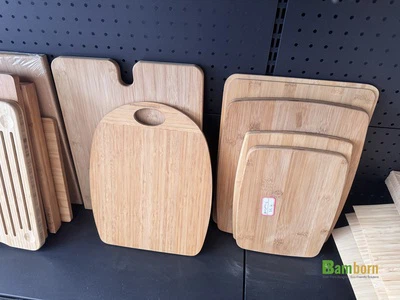
Private Label Bamboo Cutting Boards: How to Build Your Own Brand with a China Manufacturer
By Molly | OEM & Private Label Specialist in Bamboo Kitchenware
Private label is one of the fastest ways for importers, distributors, and e-commerce sellers to build margin and brand value-especially in a mature category like bamboo cutting boards.
But success doesn't come from simply putting a logo on a product. It requires choosing the right partner, controlling product details, and aligning with your target market from the beginning.
This article breaks down how to approach private label sourcing the right way when working with a bamboo cutting board manufacturer in China.
Why Private Label Works for Bamboo Cutting Boards
Bamboo cutting boards are an ideal category for private label because:
- They are lightweight and easy to ship globally
- They have a strong eco-friendly positioning
- They are highly customizable in design and size
- They appeal to both retail and professional buyers
This gives you flexibility to position your brand-from budget-friendly to premium kitchenware.

Customization Is the Core of Private Label
A good factory should not just produce standard items-they should support customization.
This includes size, shape, packaging, logo, and even surface treatment.
The more flexible the manufacturer, the stronger your brand can become.
Key Customization Options You Should Control
1. Product Structure & Design
- Thickness and dimensions
- Juice grooves or non-slip features
- Handle cut-outs or hanging holes
These design elements influence both functionality and perceived value.
2. Surface Treatment & Finish
- Natural oil finish
- Carbonized bamboo
- Smooth polishing for premium feel
A high-quality finish is critical for both aesthetics and durability.
3. Packaging & Branding
- Custom printed boxes
- Insert cards or user manuals
- Barcode and SKU labeling
Packaging is often the first physical interaction customers have with your brand-don't treat it as an afterthought.
Sample Development Process
Professional suppliers will guide you through a structured sampling process:
- Requirement confirmation
- Prototype sample
- Feedback & revision
- Pre-production sample
This ensures alignment before mass production begins.

MOQ, Lead Time & Cost: What to Expect
Understanding MOQ (Minimum Order Quantity)
MOQ depends on:
- Product complexity
- Customization level
- Packaging requirements
Custom private label orders typically require higher MOQ compared to standard items.
Lead Time Considerations
- Sample development: 5–10 days
- Mass production: 25–45 days
- Packaging customization: may add extra time
Planning ahead is critical to avoid delays in your go-to-market timeline.
Cost Structure Transparency
A professional manufacturer should clearly break down:
- Material cost
- Processing cost
- Packaging cost
- Labor and overhead
This allows you to optimize margins strategically.
How to Choose the Right Manufacturer
When evaluating a bamboo cutting board supplier, focus on:
- OEM/ODM capability
- Quality control system
- Export experience
- Communication responsiveness
A strong partner will act as an extension of your team-not just a vendor.
Final Thoughts
Private label bamboo cutting boards offer a strong opportunity to build a differentiated brand in a competitive market.
But success depends on execution:
- Choose a capable and experienced manufacturer
- Define clear product specifications
- Invest in branding and packaging
- Validate samples before scaling
Done right, private label is not just a sourcing strategy-it's a long-term brand-building strategy.
- Molly
Private Label & OEM Specialist | Bamboo Kitchenware Manufacturing