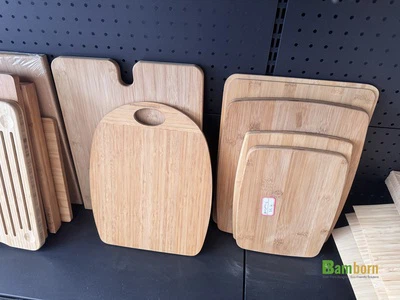
Is Bamboo a Good Material for a Cutting Board?
Bamboo cutting boards have grown in popularity due to their sustainability and performance. This article explains whether bamboo is a good cutting board material, how it compares to other options, and what qualities make it a strong choice for kitchens around the world.
1. What Makes a Cutting Board Material "Good"?
A high-quality cutting board material should meet several key criteria:
- Knife Friendliness: It should not dull or damage knife edges easily.
- Durability: It must withstand frequent cutting without cracking, splitting, or deforming.
- Hygiene: It should resist moisture penetration and bacterial growth.
- Maintenance: It should be reasonably easy to clean and care for.
- Sustainability: The material should be environmentally responsible.
Bamboo meets many of these criteria when manufactured and maintained properly.
2. Strength and Durability of Bamboo
Bamboo is technically a grass, but when processed into cutting boards, its fibers are bonded under pressure to create a dense, solid surface. This results in a cutting board that is strong and resilient.
- High density: Bamboo boards resist deep knife cuts better than many softwoods.
- Strong structure: Bamboo is less prone to cracking or splitting than some hardwood boards when properly manufactured.
Well-constructed bamboo cutting boards stand up to heavy use in home and professional kitchens alike.
3. Bamboo and Knife Edges - Knife Friendliness
One concern with harder board materials is whether they dull knives quickly. Bamboo strikes a balance: it is firm enough to provide a stable cutting surface but not so hard that it rapidly dulls most kitchen knives.
Compared with very hard materials like glass or stone (which are poor for knife edges), bamboo is a **knife-friendly choice** that prolongs blade sharpness when used properly.
4. Hygiene and Moisture Resistance
Hygiene is crucial for any cutting board. Bamboo's natural structure gives it a lower porosity than many woods, meaning it:
- Absorbs less water
- Dries more quickly when cleaned
- Reduces the risk of bacterial penetration when cleaned promptly
However, it is important to avoid soaking bamboo boards in water or placing them in the dishwasher - moisture must be dried thoroughly to prevent warping or swelling.

Contact Our Bamboo Products Specialist
Interested in premium bamboo cutting boards or custom OEM/ODM solutions? Our bamboo products team responds within 12 hours.
- Phone: +86-187-5060-0864
- WhatsApp & WeChat: 86-18750600864
- Email: molly@bamborn.com
- Address: Industrial Park, Luoxi Town, Luojiang District, Quanzhou City, Fujian Province, China
5. Sustainability - Bamboo's Environmental Advantage
One of bamboo's defining strengths is sustainability. It grows rapidly - typically maturing within 3–5 years - and regenerates naturally without replanting. This makes bamboo a more renewable and eco-friendly choice than slow-growing hardwoods like maple or walnut.
For environmentally conscious kitchens and brands, bamboo cutting boards align well with green living and sustainable product strategies.
6. Maintenance and Care
While bamboo cutting boards are relatively low-maintenance compared with some hardwoods, proper care ensures long lifespan and performance:
- Hand-wash with mild soap and warm water - never in a dishwasher
- Dry thoroughly after washing
- Apply food-grade mineral oil periodically to maintain moisture balance
- Store in a dry, ventilated location
Following these simple steps helps prevent warping and prolongs board life.
7. Bamboo vs Other Cutting Board Materials
Here's how bamboo compares with other common materials:
- Bamboo vs Hardwood: Bamboo is often more moisture-resistant and more sustainable, though both are knife-friendly.
- Bamboo vs Plastic: Plastic can be easier to sanitize (dishwasher-safe), but bamboo is more eco-friendly and durable in everyday use.
- Bamboo vs Glass/Stone: Glass and stone are poor cutting surfaces for knives; bamboo preserves blade sharpness better.
8. Final Answer - Is Bamboo a Good Material for a Cutting Board?
Yes - bamboo is an excellent material for cutting boards when manufactured and maintained correctly.
It combines strength, durability, hygiene, knife friendliness, and sustainability in a way that few other cutting board materials can match. Bamboo cutting boards are well-suited for daily kitchen use, from slicing vegetables to preparing meats, and are especially appealing for eco-conscious consumers and kitchen brands.
Choosing a high-quality bamboo cutting board and following proper care routines will ensure long-lasting performance and food-safe results.