What Is the Best Material for a Cutting Board?
Choosing the best material for a cutting board affects food safety, knife longevity, hygiene, durability, and sustainability. This guide compares common cutting board materials and highlights why bamboo is often one of the top choices for both home kitchens and commercial food preparation.
1. Key Factors That Define a Good Cutting Board Material
A high-quality cutting board material should excel across several criteria:
- Knife friendliness: The surface should be firm but forgiving, protecting blade edges.
- Durability: It should resist deep cuts, splitting, cracking, and wear.
- Hygiene: A good material should resist moisture intrusion and bacterial growth.
- Ease of Maintenance: Simple cleaning and proper care without complex routines.
- Sustainability: Renewable and environmentally responsible sourcing.
- Cost-effectiveness: Long lifespan relative to price.
Bamboo stands out as a material that balances all these performance goals effectively when produced and finished to high standards.
2. Top Cutting Board Materials & Their Pros/Cons
Bamboo Cutting Boards
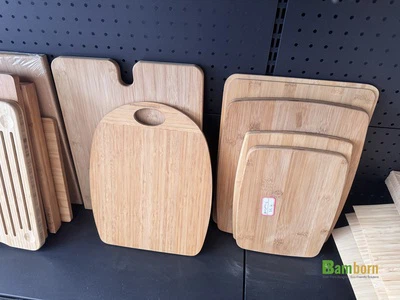
Bamboo is a natural material made from fast-growing grass fibers bonded under pressure to form dense boards. It combines strength, low moisture absorption, and a renewable footprint.
Pros:
- High density resists deep knife grooves
- Low porosity helps reduce bacterial penetration
- Sustainable - matures in 3–5 years and regenerates without replanting
- Lightweight yet strong
- Good balance between firmness and knife edge protection
Cons:
- Not dishwasher-safe - must be hand washed and dried
- Requires periodic mineral oil conditioning
Hardwood Cutting Boards (Maple, Walnut, Cherry)
Traditional hardwood boards have a long history in kitchens and remain popular due to their excellent knife friendliness and classic appearance.
Pros:
- Very gentle on knife edges
- Durable and long-lasting
- Natural antimicrobial properties in some hardwoods
Cons:
- Slower regeneration - less sustainable than bamboo
- Higher maintenance (frequent oiling)
- May be heavier and costlier
Plastic Cutting Boards (HDPE / Polyethylene)
Plastic boards are widely used in commercial kitchens and for tasks requiring frequent sanitization.
Pros:
- Dishwasher-safe - excellent sanitation
- Low upfront cost
- Color-coded boards reduce cross-contamination risk
Cons:
- Develops deep grooves quickly, which can trap bacteria
- Less knife-friendly over time
- Not biodegradable or environmentally friendly
Glass, Stone, Metal Cutting Boards
These surfaces are sometimes used for display or serving but are poor choices for cutting:
- Too hard - dulls and chips knives quickly.
- Glassy or slick surfaces increase slip risk.
- No shock absorption - can be unsafe.
3. Bamboo's Strengths Explained
3.1 Excellent Balance of Knife Friendly and Durable
Bamboo's natural fiber density provides a stable cutting surface that resists deep gouges while still being gentler on knives compared with very hard or non-porous materials. This means your knives stay sharper longer.
3.2 Better Hygiene Through Lower Moisture Absorption
A less porous surface limits water invasion and slows bacterial growth compared with highly porous woods or plastic boards with deep knife grooves. For best hygiene, clean and dry bamboo boards promptly after use.
3.3 Sustainability Leadership
Bamboo is among the most sustainable materials for cutting boards because it:
- Matures rapidly (3–5 years)
- Regenerates naturally
- Has a lower carbon footprint than slow-growing hardwoods
For green kitchens and responsible brands, bamboo is a strong environmental choice.

Contact Our Bamboo Products Specialist
Interested in premium bamboo cutting boards, custom sizes, OEM/ODM production, or bulk supply? Our bamboo products team responds within 12 hours.
- Phone: +86-187-5060-0864
- WhatsApp & WeChat: 86-18750600864
- Email: molly@bamborn.com
- Address: Industrial Park, Luoxi Town, Luojiang District, Quanzhou City, Fujian Province, China
4. How to Care for a Cutting Board Regardless of Material
Proper care helps any cutting board last longer:
- Hand wash only - never use a dishwasher on wood or bamboo
- Dry thoroughly after washing to avoid moisture damage
- Occasionally treat with food-safe mineral oil to replenish surface moisture
- Avoid prolonged standing water
- Replace boards that show deep grooves or persistent staining
5. Final Answer - What Is the Best Material for a Cutting Board?
There is no one universal "best" material, but bamboo is one of the most balanced, sustainable, and practical choices available.
If you prioritize **sustainability, lower moisture absorption, durability, and a surface that is gentle on knives**, high-quality bamboo cutting boards are an excellent option for both home chefs and professional kitchens.
For specific tasks that demand frequent sanitization (e.g., raw meat), a dedicated **plastic board** may complement your bamboo board. Together, this combination offers performance, hygiene, and sustainability.