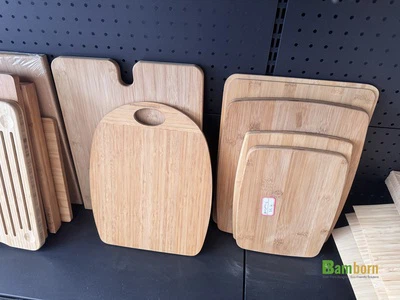
MOQ Pricing and Lead Time for Bamboo Products
For importers, wholesalers, and project buyers, three questions always come first when sourcing bamboo products:
What is the MOQ? How is the price calculated? And how long is the lead time?
Understanding these factors helps buyers plan inventory, control costs, and avoid supply chain disruptions. This article explains how MOQ, pricing, and lead time work in bamboo product manufacturing - from a factory perspective.
1. What Does MOQ Mean in Bamboo Product Manufacturing
MOQ (Minimum Order Quantity) is the smallest quantity a factory accepts for production. In bamboo manufacturing, MOQ exists because of:
Raw material preparation
Machine setup and tooling
Labor cost
Packaging customization
Quality inspection processes
Factories set MOQ to ensure production efficiency and stable quality.
2. Typical MOQ Ranges for Bamboo Products
MOQ varies depending on product type and customization level.
Common reference ranges:
Standard bamboo products: 100–300 pcs
OEM / custom bamboo products: 300–1,000 pcs
Furniture and large bamboo items: 50–200 pcs
Bamboo panels / plywood: by cubic meter or sheets
Full container orders: lowest unit cost
Lower MOQ may be possible for trial orders, but pricing will usually be higher.
3. How Pricing for Bamboo Products Is Calculated
Bamboo product pricing is not only based on material cost.
Key pricing factors include:
Bamboo material type (natural, carbonized, strand-woven)
Product size and thickness
Surface finish (oil, UV, lacquer)
Design complexity
Custom packaging requirements
Order quantity
Certification and compliance requirements
Larger quantities usually result in lower unit prices due to economies of scale.
4. Price Differences Between Standard and OEM Products
Standard products
Lower MOQ
Faster production
Lower tooling cost
Limited customization
OEM / customized products
Higher MOQ
Longer lead time
Mold or tooling cost (if applicable)
Brand-specific packaging and design
For long-term sourcing, OEM products offer stronger brand differentiation despite higher initial requirements.
5. Typical Lead Time for Bamboo Products
Lead time depends on order size and product complexity.
General lead time estimates:
Sample production: 7–15 days
Standard production: 20–30 days
OEM/custom production: 30–45 days
Peak season orders: additional 7–10 days
Factories with stable production planning can provide more accurate timelines.
6. Factors That May Affect Lead Time
Buyers should be aware of potential delays caused by:
Custom tooling or new design development
Certification testing
Packaging approval
Raw material shortages during peak seasons
Public holidays in China
Clear communication and early planning help minimize delays.
7. How Buyers Can Reduce MOQ and Lead Time Risks
Practical tips:
Start with standard designs for first orders
Combine multiple items into one order
Plan orders ahead of peak seasons
Approve samples quickly
Maintain stable reorder quantities
Factories are more flexible with MOQ and scheduling for repeat customers.
8. Why MOQ and Lead Time Matter for Inventory Planning
Understanding MOQ and lead time helps buyers:
Avoid overstock or shortages
Plan promotions and launches
Manage cash flow
Coordinate shipping schedules
Reliable suppliers help buyers scale smoothly.
9. How Professional Factories Manage Production Schedules
Experienced bamboo manufacturers manage lead time through:
Dedicated production lines
Material stock planning
Order prioritization systems
Quality control checkpoints
This ensures consistent delivery even during busy periods.
10. Bamborn's Approach to MOQ and Lead Time
Bamborn works closely with B2B buyers to balance flexibility and efficiency.
Our approach includes:
Reasonable MOQ for standard items
OEM support for custom projects
Transparent pricing structure
Stable production timelines
Clear communication throughout production
We aim to support both growing brands and large-scale importers.